Insights into Brick & Mortar, Omni Channel, and Marketplaces
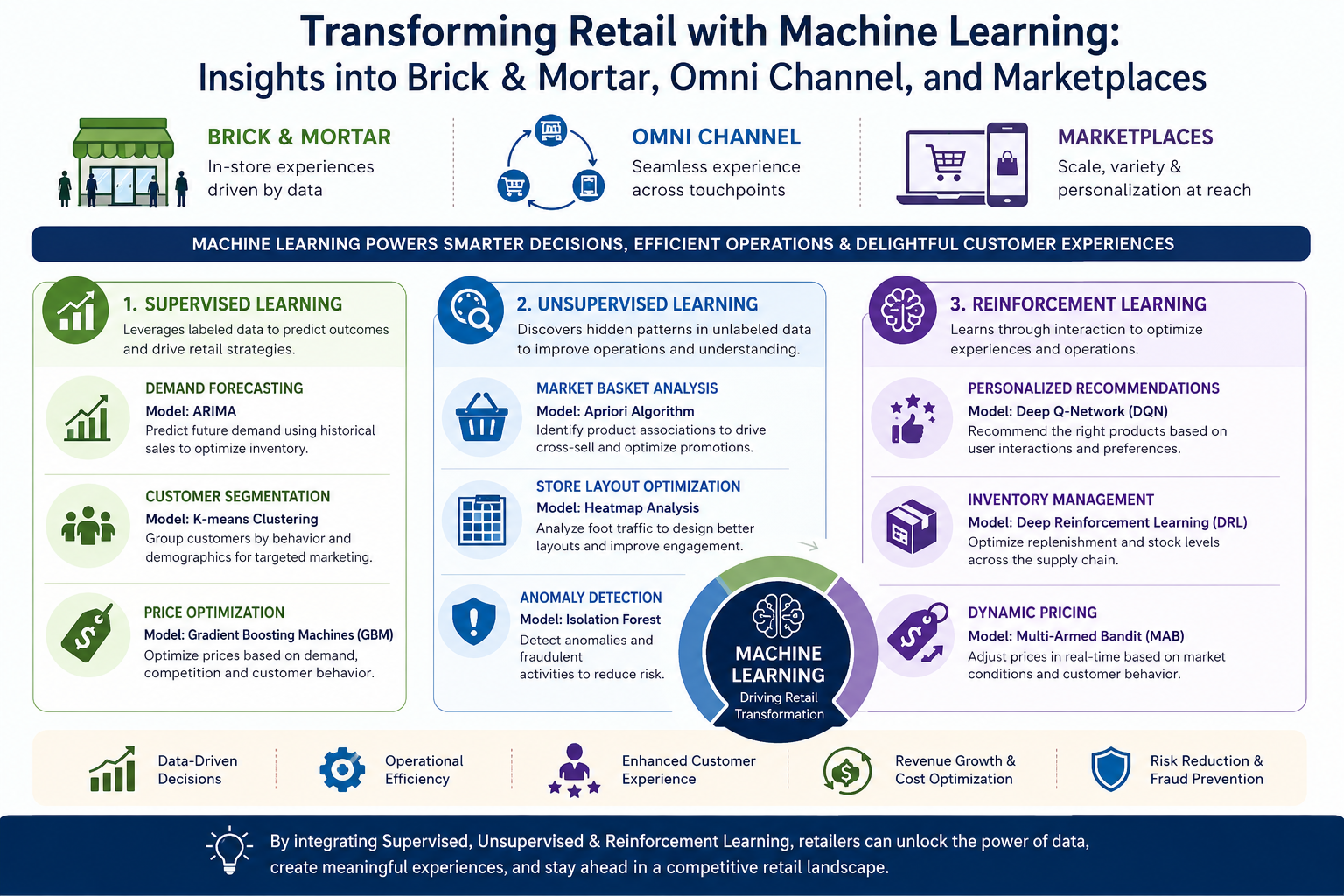
In the dynamic world of retail, harnessing the potential of Machine Learning (ML) is essential for staying competitive. Let's explore how three core ML paradigms—Supervised Learning, Unsupervised Learning, and Reinforcement Learning—are reshaping the landscape across Brick & Mortar stores, Omni Channel retailing, and Online Marketplaces, along with real-world examples and model names.
Supervised Learning: Steering Retail Strategy with Data-driven Decisions
Supervised Learning involves training models on labeled data to predict outcomes accurately, guiding retail strategies and enhancing customer experiences.
Implementation Examples:
Demand Forecasting: Model Name: ARIMA (AutoRegressive Integrated Moving Average)
Retailers utilize historical sales data to predict future demand accurately, optimizing inventory levels. For instance, Walmart employs ARIMA models to forecast demand for various products across its stores, ensuring sufficient stock availability while minimizing excess inventory.
Customer Segmentation: Model Name: K-means Clustering
Retailers segment customers based on purchase history and demographics, tailoring marketing strategies. Amazon leverages K-means clustering to categorize customers into segments such as "Frequent Shoppers" or "Occasional Buyers," enabling personalized recommendations and targeted promotions.
Price Optimization: Model Name: Gradient Boosting Machines (GBM)
Supervised learning models analyze pricing data and consumer behavior to optimize pricing strategies. Airlines like Delta Airlines use GBM algorithms to adjust ticket prices dynamically based on factors such as demand, competitor prices, and booking patterns, maximizing revenue.